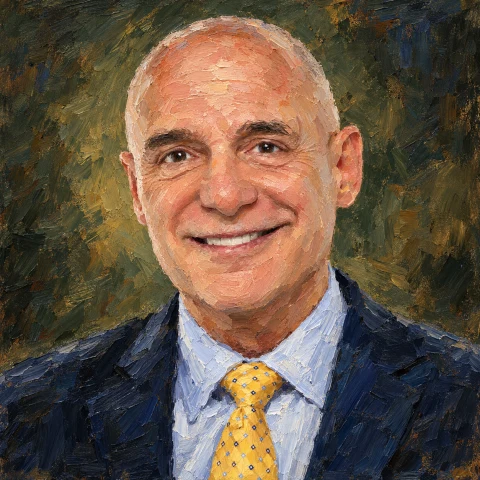
Leigh O'Dell
Mass Torts · Talcum Powder Litigation · Multidistrict Litigation
This ruling clearly upholds the Seventh Amendment’s right to a jury trial and confirms that every individual has the right to pursue a claim through the tort system.
Leigh O’Dell and Johnson & Johnson’s Talc Cases, From Three Dismissed Bankruptcies to a Philadelphia Jury
Leigh O’Dell was co-lead counsel for the women suing Johnson & Johnson over talcum powder in federal court from 2016, through three bankruptcy filings that courts dismissed. In February 2026 she tried Gayle Emerson’s ovarian-cancer case to a Philadelphia jury, which found the company liable.
On January 20, 2026, Leigh O’Dell told a jury in the Philadelphia Court of Common Pleas about Gayle Emerson. Emerson, a tax preparer born in Philadelphia, had used Johnson’s Baby Powder for feminine hygiene from 1969 until 2017, when a relative told her the powder had been linked to ovarian cancer. She had been diagnosed with the disease two years earlier, at sixty-four. She sued Johnson & Johnson in 2019 and died six months later, at sixty-eight, and her son and daughter carried the case to trial before Judge Sean Kennedy. O’Dell told the jurors that the company had kept a “dirty secret” from its customers and from the Food and Drug Administration: the talc in the powder contained asbestos. Johnson & Johnson had a safer powder made from cornstarch, she argued, and promoted it less because it had money invested in talc mines. “They knew it, they concealed it and that’s why we’re here.”
Getting a case like Emerson’s in front of a jury had taken O’Dell the better part of a decade. Judge Freda Wolfson made her co-lead counsel for the women suing Johnson & Johnson in federal court on December 6, 2016, when the consolidated docket in Trenton held a little more than seventy cases. Between October 2021 and March 2025, three bankruptcy filings by Johnson & Johnson affiliates repeatedly halted the lawsuits of tens of thousands of women. When a federal appeals court ordered the first of those bankruptcies dismissed in January 2023, O’Dell said what she meant to do with the reopened courthouse: “With the bankruptcy to be dismissed and the resulting stay lifted, we will immediately seek to efficiently schedule and conduct trials in state and federal courts, and establish the liability of Johnson & Johnson for the deaths and disease suffered by thousands of women.”
The bankruptcy the appeals court threw out was the first of three filed by Johnson & Johnson affiliates in four years, each aimed at moving the ovarian-cancer and mesothelioma claims against the company out of courtrooms and into a bankruptcy trust. Each was dismissed. O’Dell helped direct the plaintiffs’ response to all three, from LTL Management’s original petition in October 2021 through an eleven-day trial in Houston in February 2025. In February 2026 the Philadelphia jury found Johnson & Johnson liable in Emerson’s case, and that July the company agreed to a settlement of at least $5.5 billion that would pay claimants directly if 95 percent of them join it, the outcome three bankruptcy filings had been designed to prevent.
Wolfson’s Order of December 6, 2016
The Judicial Panel on Multidistrict Litigation centralized the federal talc cases in the District of New Jersey in 2016 as In re Johnson & Johnson Talcum Powder Products Marketing, Sales Practices, and Products Liability Litigation, MDL 2738, before Wolfson in Trenton. Her order of December 6 that year set up the plaintiffs’ side of the case. It designated P. Leigh O’Dell of Beasley Allen and Michelle Parfitt of Ashcraft & Gerel as co-lead counsel, Christopher Placitella as liaison counsel, a four-lawyer executive committee that included Richard Golomb, and an eleven-lawyer steering committee. Wolfson wrote that the appointments would promote efficiency, and she reserved the right to change the committees if inefficiencies arose.
O’Dell described the women she would represent in plain terms. “I feel very honored to serve on behalf of the thousands of women who are suffering and many dying of ovarian cancer,” she said. “They are or were professionals, wives, mothers, daughters, sisters, friends and they deserve so much more.” She called Johnson & Johnson’s conduct with regard to talc “reprehensible.”
In the years that followed, she and Parfitt co-chaired the plaintiffs’ steering committee. At Beasley Allen in Montgomery, Alabama, where she is a principal, O’Dell and her colleague Ted Meadows headed the firm’s talc litigation team, which by August 2026 listed fourteen lawyers.
Prattville, Vioxx and the Mesh Cases
O’Dell grew up in Prattville, Alabama, the daughter of a small business owner. She studied accounting at Auburn University and went to the University of Alabama School of Law, where she was managing editor of the Alabama Law Review. Twice she left her law practice to serve in vocational ministry. Clients come to Beasley Allen, she said in 2016, “typically after something catastrophic happened in their lives,” and what motivated her was knowing she was “one of the people who gets to help them.”
Before talc, she spent six years on the Beasley Allen trial team for five of the seventeen bellwether trials against Merck & Co. over Vioxx, which Merck had pulled from the market on September 30, 2004. In November 2007 Merck agreed to pay $4.85 billion to resolve the heart-attack and stroke claims of about 47,000 plaintiffs, a deal that would take effect only if 85 percent of the plaintiffs in some 26,600 lawsuits agreed to drop their cases. O’Dell was also appointed to the plaintiffs’ steering committee for the seven multidistrict litigations the Judicial Panel on Multidistrict Litigation created against seven manufacturers of transvaginal mesh. She has co-chaired the Bridge to Practice and Next Generation programs of Emory University School of Law’s Institute for Complex Litigation.
The Samples Imerys Disclosed on May 30, 2018
In 2018 the steering committee was trying to get at the talc itself. It wanted to test historical samples kept by Johnson & Johnson and its talc supplier, Imerys Talc America, formerly Luzenac America, for asbestos, heavy metals and arsenic. In February 2018 Imerys had stipulated to an inventory of 245 samples, every one of them from 2001 to 2014. On May 30, a week after a special master’s order on the committee’s request to depose corporate witnesses about missing samples, Imerys disclosed 203 more: twenty from 1967 through 1987, 137 from 1988, twelve from 1998, and thirty-four from 2001 through 2014.
The committee’s reply of June 14, 2018, signed by Parfitt, O’Dell and Placitella, put the disclosure in front of Wolfson. “Imerys disclosed the existence of 203 new talc samples,” it said. “The number of Imerys samples has nearly doubled.” Johnson & Johnson said it had produced more than 1,000 samples, from which the plaintiffs had chosen seventy-five; the committee counted about forty-five from the 1980s, six from the 1990s and eleven from the 2000s in the company’s first production. The defendants called more samples cumulative and the testing beside the point on whether talc could cause ovarian cancer. The committee answered that the new samples covered decades no earlier sample had reached, that testing representative samples across those decades went to causation itself, and that the defendants’ argument about numbers of samples was “a strawman and a misdirection.”
Eight Days of Testimony in Trenton
Wolfson tested the plaintiffs’ science in July 2019, in eight days of expert testimony, five witnesses for the plaintiffs and three for Johnson & Johnson. O’Dell conducted the direct examination of Dr. Daniel Clarke-Pearson, a gynecologic oncologist and professor at the University of North Carolina at Chapel Hill. She opened with his record: more than two hundred peer-reviewed manuscripts, dozens of textbook chapters, three medical textbooks he had edited. Then she took him through his systematic review of the literature and his Bradford Hill analysis. Clarke-Pearson testified that applying talcum powder products, including Johnson & Johnson’s, to the female perineum was a causative factor in epithelial ovarian cancer, and he put the increase in a user’s overall risk at twenty to sixty percent.
Fibrous Talc Before the FDA
Before Wolfson ruled, the FDA found chrysotile asbestos in a bottle of Johnson’s Baby Powder, and on October 23, 2019, O’Dell and Parfitt signed the committee’s letter telling Wolfson that the finding corroborated the testing of the plaintiffs’ expert William Longo. On February 4, 2020, the agency held a public meeting on the methods used to detect asbestos in talcum powder and talc-containing cosmetics. O’Dell spoke there for clients with ovarian cancer and mesothelioma, and two of them testified: Deborah Giannecchini, who had survived ovarian cancer, and Marvin Salter, whose mother had died of it in 2015.
O’Dell asked the agency to require testing for fibrous talc, which she called “a deleterious, cancer-causing elongated mineral fiber that should be included in all testing protocols.” “Imaging technology and techniques from the 1960s are outdated and incapable of detecting microscopic fibers,” she said, and should give way to transmission electron microscopy. “These safety regulations must be upgraded and standardized to protect public health.”
On April 27, 2020, Wolfson ruled that the plaintiffs’ clinical experts, Clarke-Pearson, the epidemiologist Anne McTiernan and Arch Carson, could testify about the link between genital talc use and ovarian cancer, and she allowed Ghassan Saed to testify on inflammation and oxidative stress and Longo on the asbestos and fibrous talc his electron microscopy found in Johnson & Johnson’s products. More than sixteen thousand cases were pending. “These respected and qualified experts will now testify in trials about the risk factors and causes of ovarian cancer, and the biological links of talcum powder use to this deadly disease,” O’Dell said.
A Subsidiary Backed by $61.5 Billion
LTL Management existed because of a maneuver available under Texas law. In October 2021, Johnson & Johnson split one of its subsidiaries into two companies through a divisional merger: one kept the consumer-products business, and the other, LTL, kept the talc liability along with a contractual right to draw cash from its former parent. LTL filed for Chapter 11 protection the same day, in the Western District of North Carolina. The case was transferred to the District of New Jersey the following month and assigned to Bankruptcy Judge Michael Kaplan in Trenton.
Kaplan tried the good-faith question in a five-day hearing and, in a 56-page opinion issued a week later, on February 25, 2022, denied the plaintiffs’ motions to dismiss. He found the filing had served a legitimate purpose, pointing to the slow pace of the underlying litigation: only forty-nine talc trials had reached a verdict since 2014, and many remained on appeal or awaiting retrial. The ruling let the automatic stay stand, freezing the pending cases in place.
On January 30, 2023, the United States Court of Appeals for the Third Circuit reversed Kaplan’s ruling and ordered the dismissal of a Chapter 11 case that had frozen roughly 38,000 lawsuits accusing Johnson & Johnson of selling talcum powder contaminated with asbestos. Writing for a unanimous panel that included Judges Restrepo and Fuentes, Judge Thomas Ambro held that the debtor, a fifteen-month-old company called LTL Management LLC, had never been in financial distress and so could not show that its bankruptcy served a valid purpose or was filed in good faith. “What counts to access the Bankruptcy Code’s safe harbor is to meet its intended purposes,” the panel wrote. “Only a putative debtor in financial distress can do so. LTL was not.”
The panel examined LTL’s funding agreement. It gave LTL the right to draw cash from Johnson & Johnson and a spinoff entity called New Consumer, jointly and severally, up to the full value of New Consumer as of the filing date, a value the parties put at $61.5 billion. Against that backstop, the company’s own estimate of the talc liability it had assumed, roughly $2.4 billion over two years, did not amount to distress. “The bigger a backstop a parent company provides a subsidiary,” the panel wrote, “the less fit that subsidiary is to file.” Dismissal would void the stay.
O’Dell had spent those fifteen months as co-lead counsel for the plaintiffs in the underlying multidistrict case. Of the ruling, she said: “This ruling clearly upholds the Seventh Amendment’s right to a jury trial and confirms that every individual has the right to pursue a claim through the tort system.” She gave the credit to the women who had sued. “We are privileged to represent thousands of women who stood up to one of the most powerful corporations in the world,” she said. “We are grateful for their courage.”
Two Hours
On April 4, 2023, the bankruptcy court entered the dismissal order the Third Circuit had required. O’Dell said the plaintiffs were prepared to move forward in the multidistrict case and resume scheduling bellwether trials. “Hundreds have died during the past 18 months,” she said, “and with the dismissal of J&J’s bankruptcy claims, any attempt at a further delay by J&J should be viewed as an outrage.” Within two hours of the dismissal, LTL filed a second Chapter 11 petition, this one built around a proposed plan to pay $8.9 billion over twenty-five years.
O’Dell and Parfitt answered in a joint statement. “The talc ‘settlement’ being touted by J&J and the media is NOT a settlement,” they said. The proposal, by their count, would pay “far less than $120,000 per case, if that.” “All 14 members of the plaintiffs’ steering committee reject this proposal,” they said, and if no fair deal came, they would get the second bankruptcy thrown out, “just as we did the first.” The company’s own chief legal officer testified that, notwithstanding the figure, there was no settlement: neither the plan nor any agreement supporting it had been finalized as one.
Kaplan held a four-day evidentiary hearing beginning June 27, 2023, with a dozen live witnesses, and dismissed the second case on July 28, finding again that LTL had not shown financial distress and had filed in bad faith. “It is undisputed that, as of the filing date of LTL 2.0, Debtor was solvent,” he wrote, and LTL’s evidence of coming distress left him unpersuaded: “In sum, this Court smells smoke, but does not see the fire.” Andy Birchfield, who heads Beasley Allen’s mass torts section, said: “Today the court has finally, rightfully denied this latest attempt by one of the world’s largest and most financially successful companies to abuse the bankruptcy system and avoid responsibility for its dangerous product.” Birchfield worked the filing alongside O’Dell and Meadows, who together had spearheaded the plaintiffs’ opposition to it.
O’Dell said that day: “This has gone on too long. It’s time for our clients to have their days in court and for J&J to stop its bullying tactics and end this nightmare for victims.” Parfitt, her co-chair, priced the plan against the disease. “Average costs for medical care, lost wages, lost jobs and pain and suffering can average more than $500,000 and up to more than a million dollars per victim,” Parfitt said. Two bankruptcies down, the underlying tort claims remained exactly where they had started: unresolved, and waiting on a jury.
In September 2023 the parties met for the first multidistrict status conference since the dismissal, before Judge Michael Shipp, who had taken over the case when Wolfson retired. The one disputed item in the proposed bellwether schedules was whether Johnson & Johnson could relitigate Wolfson’s ruling on the general-causation experts, and Shipp took it under advisement. “We’re focused on accomplishing a just and fair resolution for our clients,” O’Dell said. “We believe that means moving forward with the trial of as many cases as possible and as expeditiously as possible.”
What the Sister Study Found
In May 2024, scientists at the National Institutes of Health published a new analysis of the Sister Study, which had enrolled more than 50,000 American women aged thirty-five to seventy-four between 2003 and 2009. Women who had used talc on their genitals frequently or for many years had a higher risk of ovarian cancer, and twenty years or more of use roughly doubled it. “That’s a powerful finding, particularly in a study where prior data didn’t show an increased risk,” O’Dell said. The results, she said, were “completely consistent with what the plaintiffs’ experts have been saying for two years.”
That July the International Agency for Research on Cancer, part of the World Health Organization, raised its classification of genital talc use to Group 2A, probably carcinogenic to humans, from the possible-carcinogen rating it had given talc in 2006. “It is telling that Johnson & Johnson is the only entity vehemently denying the carcinogenic nature of talcum powder,” O’Dell said. “Because of its liability J&J has the most to lose, except for the countless number of women who have lost their lives because of the company’s products.”
Eleven Days in Houston
Johnson & Johnson was already preparing a third attempt. In May 2024 it began soliciting claimants’ votes on a prepackaged bankruptcy plan that needed the support of 75 percent of them. “The company is afraid of a legitimate vote among those who are truly sick and the families of the deceased who have been battling J&J’s obstruction and bad faith for years,” O’Dell said.
On September 20, 2024, a newly created affiliate, Red River Talc LLC, filed for Chapter 11 in the Southern District of Texas, before Bankruptcy Judge Christopher Lopez in Houston. The plan proposed a $9 billion trust, and the company reported that roughly 83 percent of surveyed claimants had voted to support it, a figure the objecting lawyers disputed, pointing to irregularities in how the vote had been solicited.
The objectors organized as the Coalition of Counsel for Justice for Talc Claimants and were joined by the Office of the United States Trustee. From February 18 to February 28, 2025, the two sides tried the good-faith question in Houston. The coalition and the Trustee’s office argued that bankruptcy law exists to help the “honest but unfortunate debtor,” the traditional phrase, and that Johnson & Johnson, solvent, and settling claims on its own terms while claimants had little real choice but to accept them, did not fit it.
The financial evidence tracked the gap the Third Circuit had already identified. Johnson & Johnson reported 2024 earnings of $14.07 billion on revenue of $88.82 billion and a net worth the company put near $400 billion; it had kept settling talc claims outside of bankruptcy throughout the case, evidence of a company that was not in distress. Testimony detailed what the plan actually did: it left the division between money for current and future claimants uncertain, gave claimants no clear payment timetable, left medical liens unresolved, and restricted the right to opt out. By then, roughly 90,000 talc claims were pending; the stay had frozen litigation, not filing.
Judge Lopez, who had admitted more than 1,800 exhibits, dismissed the case on March 31, 2025. He found that more than 90,000 votes had been cast and that “at least half of them cannot count,” and that the plan imposed releases of Johnson & Johnson and others on claimants without their consent: “Claimants could not opt out or opt in to these releases.” No single defect decided the case. “It is all of them together that require the Court to dismiss this case,” Lopez wrote.
Birchfield, who had helped lead the opposition, said: “This was nothing more than a bad-faith maneuver to avoid full accountability. With this ruling, we are now moving forward without delay to trial, where our clients will finally have the chance to present their cases before a jury and obtain the justice they deserve.” Johnson & Johnson chose not to appeal, saying it would contest the claims in the tort system instead, the same tort system O’Dell had invoked after the first dismissal, two years and two bankruptcies earlier.
Three and a Half Days of Deliberation in Philadelphia
The Emerson trial ran three weeks. O’Dell tried it with her Beasley Allen colleagues David Dearing, Ted Meadows and Ryan Beattie and with Richard Golomb and Kevin Fay of Golomb Legal. Shaila Diwan of Kirkland & Ellis argued for Johnson & Johnson that Emerson’s age, obesity, douching and family history accounted for her cancer, and that asbestos fibers are inert and do not migrate the way the plaintiffs claimed, so talc applied to the skin was unlikely to reach the ovaries. “The evidence shows this was not caused by Johnson’s baby powder,” Diwan told the jury.
O’Dell closed on February 10. “Johnson & Johnson hid the presence of asbestos from the FDA, regulators, and consumers like Ms. Emerson since the 1960s,” she told the jurors. “The evidence is clear.” She showed them a slide of the company’s reported net worth, $72.27 billion, and asked for punitive damages: “Whatever the amount, it should reflect the company’s net worth and send a clear message.”
The jury deliberated for three and a half days. On February 13, 2026, it found Johnson & Johnson liable and awarded Emerson’s estate $50,000 in compensatory damages and $200,000 in punitive damages. Johnson & Johnson had stopped selling talc-based baby powder in the United States in 2020 and switched to cornstarch, the alternative O’Dell told the jury the company had promoted less heavily because of its talc mines.
$5.5 Billion, on One Condition
Facing trial dates instead of a fourth bankruptcy filing, Johnson & Johnson negotiated directly. On July 27, 2026, the company agreed to pay at least $5.5 billion to resolve roughly 70,000 pending ovarian-cancer lawsuits over its talc products. The figure is a floor with no cap: individual payouts are set by the severity of each claimant’s diagnosis, and the total cost can rise past $5.5 billion as more claims qualify.
The agreement becomes final only if at least 95 percent of the remaining claimants take part. An initial payment of up to $3 billion is due in 2027, with no further payment required before 2028. A woman diagnosed with ovarian cancer after using the products can still bring a claim, a possibility none of the three bankruptcy trusts would have allowed.